So for those of you not familiar with the term “Black Label”, it’s used a lot in PlayStation One PAL collecting to draw attention to the release having the hologram and PlayStation text-based logo on a black background on the lower portion of the front artwork on games.
Hundreds of PAL PlayStation games were released before the black label even existed. For these early titles, the “black label” version could actually be a reprint, not the original release.
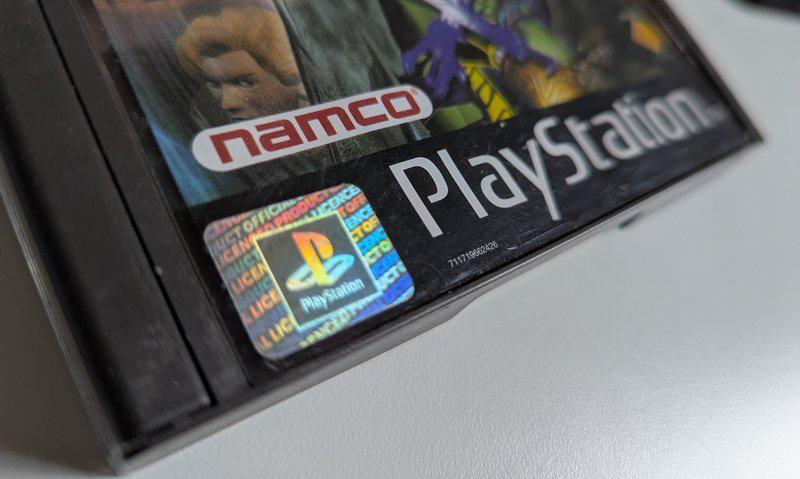
What Collectors Mean by Black Label
In the PAL collecting community, the term is typically used to distinguish original releases from the later budget re-releases. Collectors often want to avoid Platinum editions, which featured silver colouring across the front, back and spine. This same logic applies to other budget ranges like PlayStation’s “Value” series and publisher-specific re-releases that games received throughout the console’s lifecycle.
The assumption is that “black label” equals “original release” and everything else is a reprint. But this falls apart when you look at the actual history of PAL PlayStation releases.
When Black Labels Actually Appeared
The black label design started appearing on PAL releases in early to mid-1997. This was around the time that mod chips were gaining widespread popularity, and the new design was almost certainly a response to increasing piracy concerns.
All PlayStation games worldwide up to this point had featured the colourful PS logo (in the top left corner for PAL games) with “PlayStation” text below. The introduction of the black label bar added an additional anti-piracy measure: a second “PlayStation” text at the bottom of the artwork, taking up roughly the bottom sixth of the front cover, with space on the left for a holographic sticker to be applied externally to the case.
This hologram was the real anti-piracy feature - it was difficult to replicate and served as a visual authentication mark for genuine copies.
The Real Confusion
For a lot of the collecting community, “black label” has become synonymous with the original release of PlayStation games. But there are hundreds of games released well before the introduction of the black label in 1997.
These original releases featured artwork that completely covered the front of the case, with no black bar at the bottom and no hologram. Games like WipEout, Destruction Derby, Ridge Racer, Formula 1, and countless others launched with this original artwork style.
For these early titles, the black label version is actually a later printing, not a first edition.
The Rayman and Tomb Raider Problem
To make matters more confusing, some high-profile games that launched early in the PlayStation’s lifecycle were reprinted with the black label design. Rayman and Tomb Raider are perfect examples - both were originally released without the black label, but received reprints that added it.
So depending on the game:
- “Black label” might mean it’s the original release (for games from mid-1997 onwards)
- “Black label” might mean it’s a reprint (for games originally released before mid-1997)
- “No black label” might mean it’s the original release (for early games)
For collectors trying to identify genuine first editions, this terminology creates more confusion than clarity. You can’t simply search eBay for “black label” and assume you’re getting an original release unless you know more about the history of the game you’re collecting!
What This Means for Collectors
If you’re collecting PAL PlayStation games and want true first editions, you need to know the release timeline for each specific title. A black label doesn’t automatically mean “original” - and the absence of one doesn’t automatically mean “reprint.”
The purpose of this site is to document these variations clearly, so collectors can identify genuine first editions, understand printing variations, and know exactly what they’re looking at when a game appears without the familiar black label bar.
Rather than relying on simplified terminology, we need to look at actual release dates, printing variations, and specific visual differences between editions. It’s more complex than “black label good, everything else bad” - but it’s also more accurate.