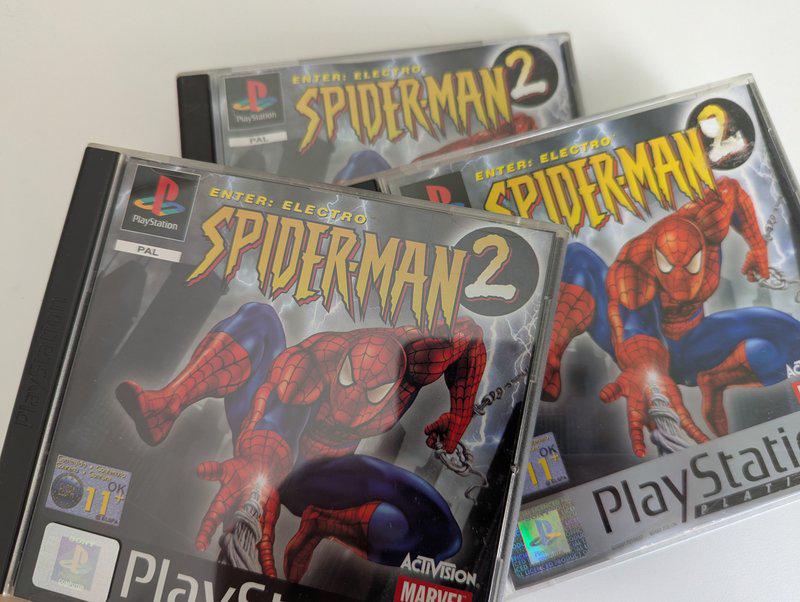
I’ve been collecting PAL PlayStation for a long time, and in that time I’ve come across all manner of obscure pressings, regional oddities, and genuine rarities. But there’s one variant that I keep coming back to - one that almost nobody talks about, rarely surfaces on the market, and when it does, often sells for less than it deserves. In my opinion, the pre-9/11 PAL pressing of Spider-Man 2: Enter Electro is the most underrated rare collectible on the entire PAL PS1 market.
Let me explain why.
What Is It?
In 2001, Activision was preparing to release Spider-Man 2: Enter Electro on PlayStation. Developed by Vicarious Visions as a sequel to Neversoft’s well-received 2000 original, the game follows Spider-Man as he attempts to stop Electro from obtaining the Bio-Nexus Device, with bosses including Shocker, Hammerhead, Lizard, and Sandman. The PAL launch was scheduled for 18th September 2001.
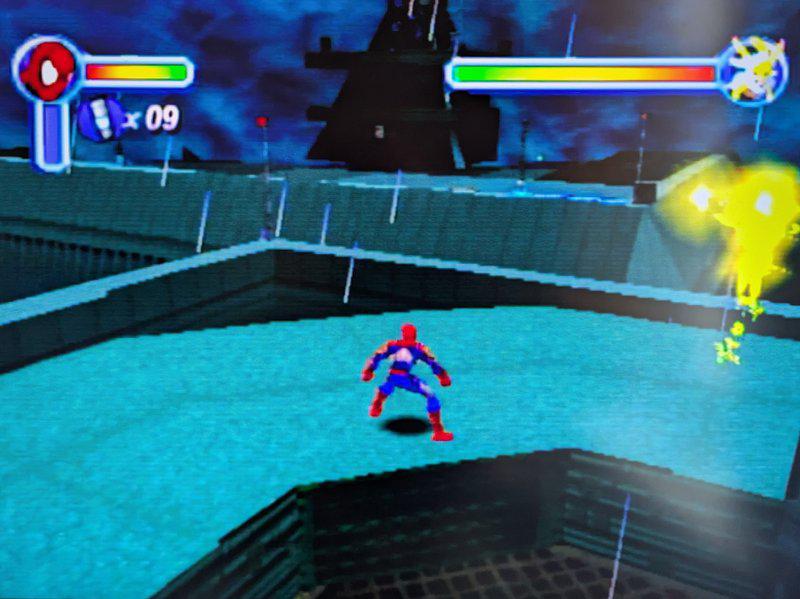
That date will be familiar to anyone alive at the time. The 11th September attacks happened just seven days before the scheduled release, and they had a direct impact on the game’s content.
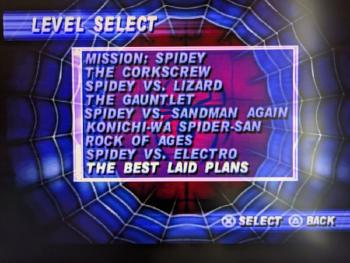
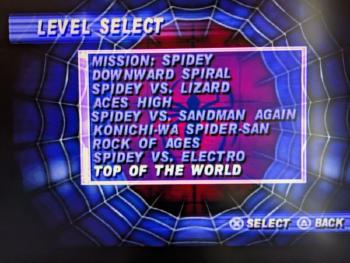
In its original form, the game’s climactic level - titled “Top of the World” - pitted Spider-Man against Electro atop the Twin Towers of the World Trade Center, with a set piece involving Electro destroying a section of the North Tower. The towers featured in the game’s storyboards, cutscenes, and level geometry. In the original version, Electro shouts “Top of the world, man!” as he departs for the towers, giving Spider-Man the clue he needs to track him down for the final confrontation. In the immediate aftermath of 11th September, that content was impossible to release unchanged.
Activision made the call to delay and rework the game. The final level was redesigned around a generic skyscraper, a bridge was added between the two towers so they no longer resembled the Twin Towers, textures were changed, the Bugle headlines were altered, and the Twin Towers were removed entirely from the unlockable storyboards. The game shipped approximately one month later - the US release landing on 19th October 2001, with the PAL release following a week behind on 26th October 2001.
It was the right call. But it left something behind.
How Many Exist?
The original retail pressings - manufactured for that 18th September release window - had already been produced before the delay was announced. These were proper retail discs, complete with final printed artwork and packaging. Not review copies. Not press discs burned onto blank CDs. Finished, retail-ready product.
So how many of those original pressings are actually out there?
I’ve been watching eBay closely for years - pretty much every Spider-Man PS1 listing that comes up, I see it. Over the past five years, I’ve spotted six copies. That’s a meaningful data point, but to translate it into a total population estimate you need to think carefully about what fraction of existing copies are actually making it to market.
For a well-known rarity, you might expect 10–20% of existing copies to surface on eBay over a five-year window. But this variant is the opposite of well-known - most owners almost certainly have no idea what they’re sitting on. A copy like this is far more likely to be in a box in someone’s attic, lumped in with a job lot, or already in a collection where it will never be sold. I’d put the realistic surfacing rate at somewhere between 5–15%.
At this point I would note that only the UK version has this characteristic. The other PAL territories were localised and do not feature the markings used to identify this pre-cencored version. I’ve played the French version and it has the post censor changes. My coverage of actual transactions is probably somewhere around 60–70% of the total.
Applying a realistic 8–12% surfacing rate against that gives a central estimate of around 75 copies in existence, with a plausible range of 50–150.
“Fewer than 100” is a defensible claim. Both figures are estimates derived from market observation rather than any verified print run data - but based on everything I can observe, this is genuinely rare in a way that the market hasn’t fully priced in.
How Did They Get Out?
This is the mystery I decided to investigate properly.
My initial assumption was that the copies in the wild were press or review discs that had leaked - journalists had been previewing the game in the months prior, so it seemed plausible that some pre-release material had found its way into collectors’ hands over the years.
I decided to go to the best possible source. I reached out to TQ Jefferson, the producer on the project at Activision, and he was kind enough to respond with exactly the clarity I was hoping for.
On the question of press copies, he was unambiguous: the review discs sent out ahead of launch were burned discs with no artwork - not the finished retail product. That rules them out immediately as the source of what we see surfacing on the market.
On the retail copies, he explained that distribution in 2001 was considerably more hands-on than it is today. Games were physically loaded onto trucks for retail distribution. The September 18th pressings were already in that chain when the decision to delay came. His explanation for how copies escaped the recall was direct: they “fell off the truck”. Retail employees, warehouse staff, or someone else in the distribution chain got hold of them before the recall could be fully executed.
When I asked him how he felt about the recall at the time, he was characteristically straightforward: “100% - it was personally heartbreaking to recall the game, but it was the exact right call to make given the circumstances.”
How to Identify One
PAL collectors have a genuine advantage over their NTSC counterparts: you can identify a pre-9/11 copy from the disc alone, without relying on the game content, box condition, receipt provenance, or seller claims.
The PAL Spider-Man 2: Enter Electro disc carries the serial code SLES-03623. In the post-delay, modified release, that code includes a # suffix - a convention commonly used to signify a modified or revised pressing.
The pre-9/11 copy does not carry the # suffix.
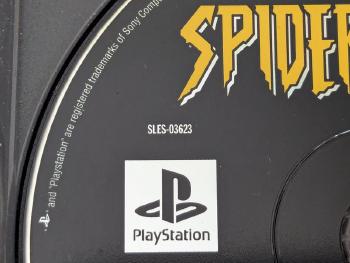
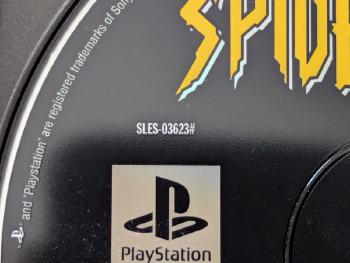
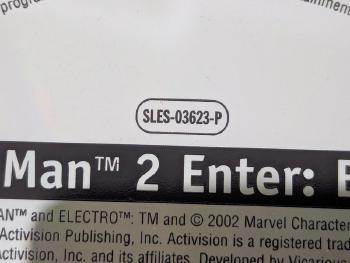
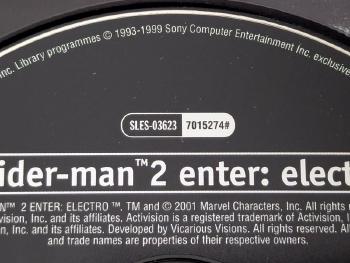
If you’re looking at a PAL disc and the code reads SLES-03623 without any suffix hash, you’re looking at an original September pressing. It’s a clean, unambiguous identifier pressed into the disc itself - no guesswork required.
Note that the platinum version obviously doesn’t have a cencored version, being that it was release a year later.
Interestingly, the promo version does not have a hash on the SLES code, but I can confirm contains cencored content.
If you’re trawling car boot sales, charity shops, or online listings - and this is exactly the kind of game that does still turn up in those places, often in a box of loose discs - it’s worth taking thirty seconds to check the code on any copy you come across.
Why It Deserves More Attention
The NTSC version of this story has some traction among US collectors. The PAL version is barely discussed.
The combination of genuine historical significance, an estimated population of around 75 copies, confirmation from the original producer that retail copies escaped via the distribution chain, and a clean disc-level identifier makes this one of the most compelling variants in the entire PAL catalogue. The fact that it occasionally sells without the buyer realising what they have is equal parts frustrating and exciting.
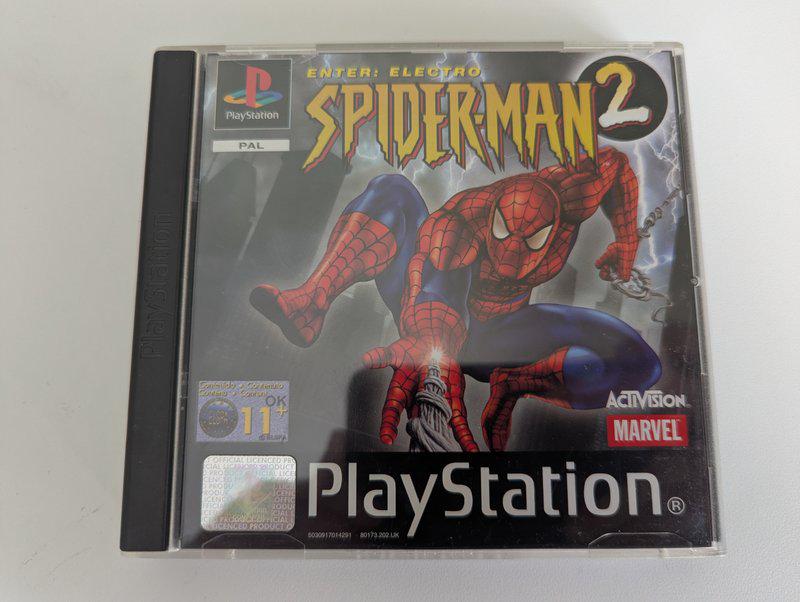
If you’ve got one, or you know someone who does, I’d genuinely love to hear from you. And if you have any further insight into the distribution or recall side of things, do reach out.
This one deserves to be properly documented.