Sometimes it’s the small things that catch your eye. A detail that doesn’t quite fit, a number that looks slightly off. Most of the time it turns out to be nothing - but occasionally it’s the thread that unravels something genuinely interesting…
If you’re not familiar with how I approach variant research, I’ve written about my general method in a previous post worth a read before diving in here.
Two EAN Numbers
Most PAL PS1 titles published by Sony Europe share a recognisable EAN structure: the barcode begins with 0711719, Sony’s publisher prefix. It’s consistent across their catalogue and one of the quickest ways to confirm a Sony-published release at a glance.
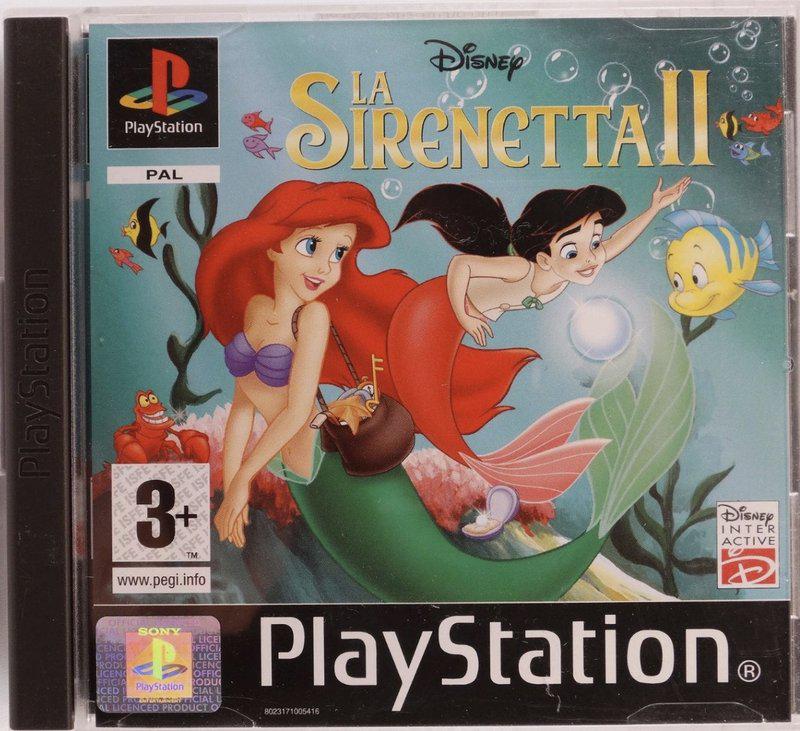
So when I came across an Italian copy of La Sirenetta II - the Italian localisation of The Little Mermaid II - with an EAN starting 8023171005416, it stood out.
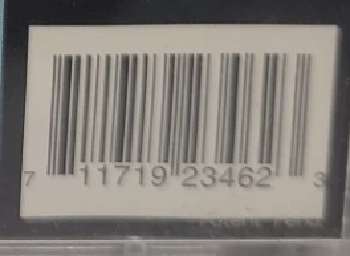
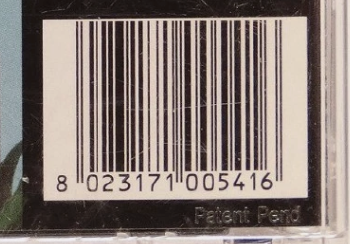
What made this more puzzling is that I had already seen Italian copies with the standard Sony EAN 0711719234623. So the question became: why would there be two different releases of the same Italian version?
Reading the Copyright Notice
PS1 game cases rarely carry an explicit release date. However, the copyright notice printed on the back of the case is often the best clue available - with some important caveats. In my experience, the copyright year isn’t always updated between pressings, and Platinum releases in particular tend to carry the original year regardless of when they were actually manufactured.
With that in mind, the copyright text on the 8023171 copy immediately raised an eyebrow.
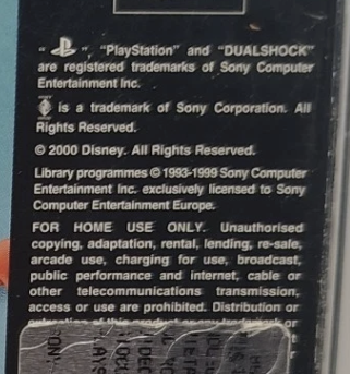
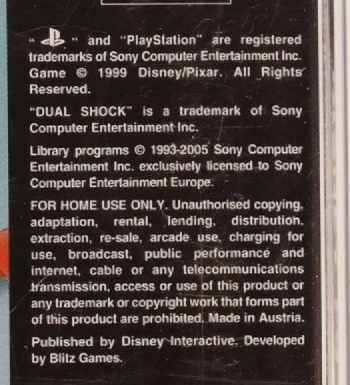
The game copyright reads 1999 - which would, taken at face value, place this release before the standard Sony editions, which all carry a 2000 copyright. That seemed implausible. The Little Mermaid II was developed by Blitz Games in the UK as a region-wide PAL release; a country-specific Italian launch ahead of the broader rollout would be very unusual.
Then I noticed two further details that reframe everything.
First, the Sony copyright line reads 1993–2005 - which firmly places manufacturing at least five years after the 2000 game copyright.
Second - and this is the detail that really clinches it - the Disney copyright on this copy is attributed to Disney/Pixar.
The Disney–Pixar merger was completed in May 2006. Before that point, the two companies were separate entities and would not have appeared together under a shared copyright. A PS1 case bearing a Disney/Pixar credit could only have been produced after that merger was finalised.
What This Tells Us
Putting it together: the 8023171 copy of La Sirenetta II is almost certainly a reprint produced in mid-to-late 2006, very late in the PS1 lifecycle. The 1999 game copyright was liekly a mistake in putting the game art back together - but the Sony range date and the Disney/Pixar branding accidentally preserved the true production window.
The non-Sony EAN suggests this reprint was manufactured or distributed through a different channel than Sony’s standard publishing pipeline, likely a regional Italian distributor or budget reissue arrangement. That would also explain why the Sony EAN version continues to exist alongside it - they appear to be from different pressing runs rather than one replacing the other.
It’s a small detail on the back of a PS1 case, but it tells a surprisingly complete story.
Who Was Behind the Reprint?
Following up on the EAN prefix through GS1 Italy’s registry finally answers the question. The 8023171 company prefix is registered to Digital Bros SpA, headquartered at Via Tortona 37, Milan.
Digital Bros is a well-known name in Italian gaming history. Founded in 1989 by brothers Abramo and Raffaele Galante, the company spent the 1990s as one of Italy’s primary distributors of international games under their Halifax brand. Their catalogue included major PlayStation-era titles such as Pro Evolution Soccer, Tomb Raider, and Resident Evil. They listed on the Italian Stock Exchange in 2000, and later founded 505 Games in 2006 - a publisher still active today.
So the picture becomes clearer: this late reprint of La Sirenetta II wasn’t a Sony operation at all. It was put out by Digital Bros through their Halifax distribution arm, almost certainly as a budget reissue targeting the Italian market in the final months of the PS1’s commercial life. The Disney/Pixar branding, the Italian GS1 prefix, the non-Sony EAN - all of it points to a locally-arranged pressing that slipped out quietly in mid-2006, carrying the post-merger copyright almost by accident.
It’s a fitting footnote for one of Italy’s most prominent game distributors of that era, and a useful data point for anyone cataloguing late PS1 pressings in the Italian market.